
BUSINESS
France Extends Its Soda Tax to Packaged Biscuits and Cereal
France’s 2027 social security bill copies the soda tax onto packaged biscuits and cereal, on a sliding sugar scale whose 2012 record already showed prices.

France’s 2027 social security bill extends the soda tax to packaged biscuits, cereal, ice cream and sweets, on a sliding sugar scale from 1 January 2027. Health minister Stéphanie Rist told reporters on 1 October 2026 that the levy hits processed foods that contain sugar, additives and packaging.
The design is not new. Paris has taxed sweetened drinks since January 2012, then tied the rate to sugar in 2018 and raised it again in 2025. That earlier tax already showed how a small levy behaves once it leaves the statute book.
Ice Cream, Cereal and the Article 8 List
Article 8 of the social security financing bill for 2027 copies two drink taxes onto solid foods. One follows total sugars. The other follows synthetic sweeteners. Both apply only to prepacked products meant to be eaten as they are, or after a simple reheat or thaw.
The filed text does not tax every sweet thing in a French kitchen. It names customs codes, then a sugar floor of 10 grams per 100 grams, then at least one food additive under European rules. Rist put the political test in one line on Sud Radio on 2 October 2026.
If you have products that contain only sugar, they will not be taxed. If you have sugary products plus additives and which are packaged, those will be taxed.
Stéphanie Rist, health minister, Sud Radio
The bill’s own statement of reasons lists the pantry items the government wants in scope.
PRODUCTS NAMED IN THE BILL
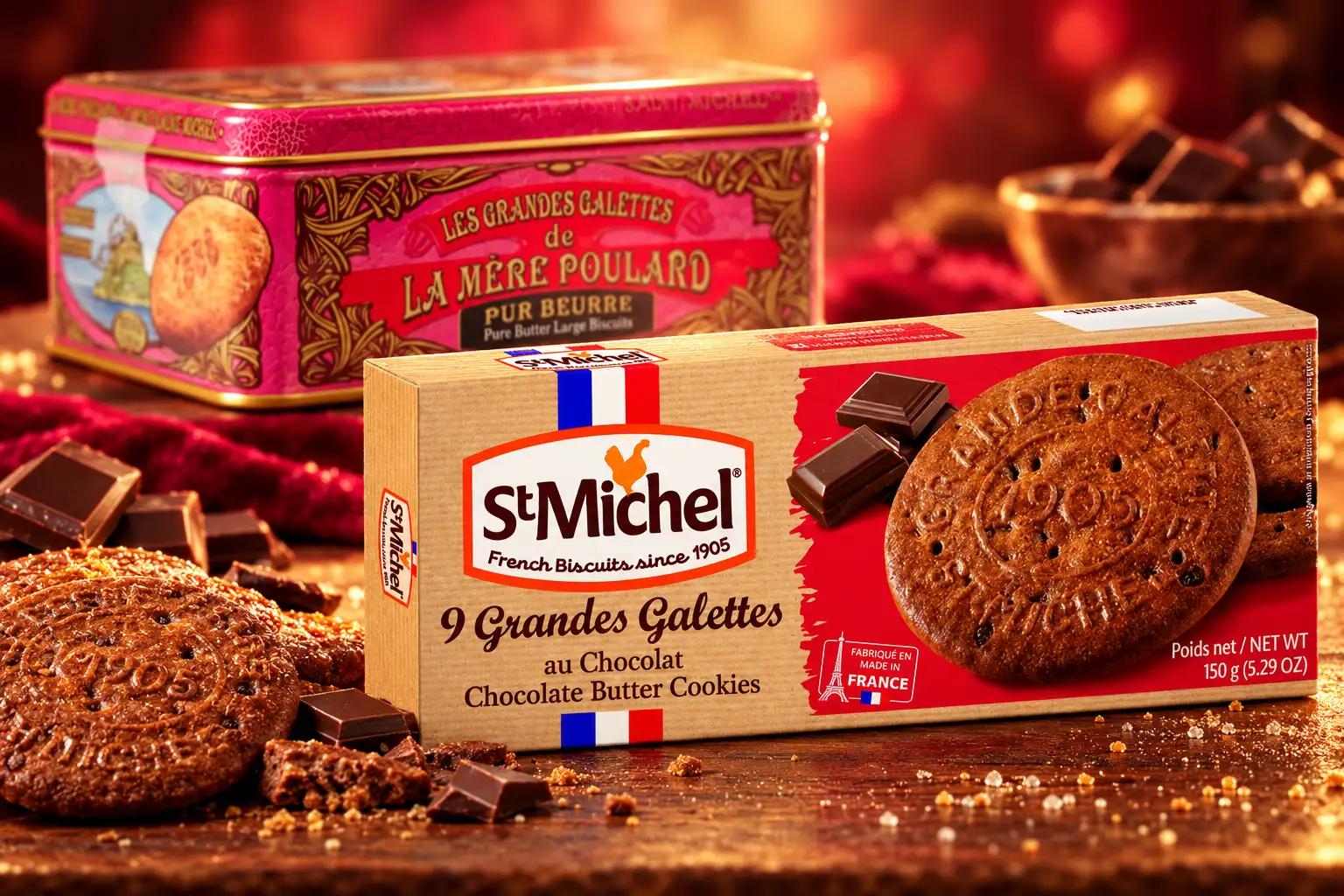
- Industrial bakery: Viennoiseries, pastries, biscuits and industrial cakes, plus rusks and gingerbread under code NC 1905.
- Breakfast aisle: Puffed or roasted cereals, flakes and muesli mixes under NC 1904, with cereal bars in the same sweep.
- Freezer case: Ice creams, sorbets and water ices under NC 2105.
- Sweets counter: Sugar confectionery and chewing gum under NC 1704, with chocolate and cocoa preparations under NC 1806.
- Other mixes: Selected preparations under NC 1901 90 99, including items such as milk jam and powdered dessert mixes.
Rist said the point is to talk to factories, not to scold shoppers. “The objective of this tax is really to speak to manufacturers, to tell them to change their recipes,” she said on 2 October 2026. Commerce minister Serge Papin had already framed the health case on 30 September 2026, saying there is too much obesity and too much diabetes, and that a nine-year-old has eaten as much sugar as a grandfather ate in a lifetime.
What the 2012 Soda Tax Changed
The drink tax began as a flat 7.16 euros per hectolitre in January 2012, after parliament doubled the government’s first draft. Banque de France researchers, using more than 500,000 supermarket price records, found that after six months the levy had been fully shifted onto soda prices. Fruit drinks took almost all of it. Flavoured waters took less.
Purchases barely moved. A 2019 evaluation in PLOS ONE, using French and Italian home-scan data, found mixed and fragile evidence of a cut, at most half a litre per person a year for soft drinks, a result the authors said fitted the low rate. Fruit juices and water did not shift in a clear way. Heavy buyers showed a larger response in one cut of the sample.
Mathieu Plane, an economist at OFCE, the French economic observatory, has drawn the same lesson from the years of receipts that followed.
Consumer behaviour has not been radically changed. It brings in a lot of money, so households keep consuming these sodas.
Mathieu Plane, economist, OFCE
The scale in force for drinks in 2026 sits in the tax office tables. Under the official 2026 soda-tax scale, added sugar below 5 kilograms per hectolitre is taxed at 4.07 euros, the band from 5 to 8 kilograms at 21.38 euros, and anything above 8 kilograms at 35.63 euros. Diet drinks pay a separate sweetener levy of 4.50 or 6 euros per hectolitre. Those drink rates were rebuilt in 2018, then lifted from 1 March 2025. Article 8 now pastes the same logic onto solids, including the sweetener net.
A Bakery Croissant Walks Free, a Packaged One Does Not
The government says it wants to keep the French model of food from farms and to protect artisanal products. That is a political promise. It is not a named exemption in the article as filed.
A baker selling an unpackaged croissant over the counter is outside the prepacked test. A factory bun in a printed film, carrying an E-number and sitting in one of the listed customs codes, is inside it. The filter is packaging, the customs code, total sugars and the presence of at least one additive. Honey or fruit sugar in a recipe counts, because the solid-food test uses total sugars, not only sugars added in the plant.
Jean-François Loiseau, president of ANIA, the food-industry trade body, spent 30 September 2026 warning that Dijon gingerbread, Montélimar nougat and French honey would be hit from the first gram. The filed thresholds start at 10 grams of sugars per 100 grams, so his “first gram” line does not match the text. His deeper point still stands for any packed, additive-bearing recipe that clears that floor, including some traditional names once they leave a craft counter and enter a supermarket wrapper.
Rist’s additive test is the practical carve-out. A packed biscuit with no listed additive stays out. A packed biscuit with a colour, preservative, emulsifier or coating agent stays in, if the sugar share is high enough. Factories that already run clean labels get a cheaper path than factories that rely on the E-number toolkit.
The Cents on a Kilo of Biscuits
Two grids apply. Biscuits, cereal, cakes and ice cream share one. Candy and chocolate share another, with higher sugar tripwires, because those recipes are mostly sugar to begin with. Rates are set per quintal, which is 100 kilograms, and would rise each 1 January with consumer prices excluding tobacco.
PROPOSED SOLID-FOOD SUGAR RATES
| Product group | Lower band | Middle band | Top band |
|---|---|---|---|
| Biscuits, cakes, cereal, ice cream (NC 1901 90 99, 1904, 1905, 2105) | 4.07 euros per 100 kg (10 to under 23 g sugars per 100 g) | 14 euros (23 to under 30 g) | 22 euros (from 30 g) |
| Candy and chocolate (NC 1704, 1806) | 4.07 euros per 100 kg (10 to under 47 g) | 14 euros (47 to under 56 g) | 22 euros (from 56 g) |
Twenty-two euros per 100 kilograms is 22 cents per kilogram. A 500-gram pack in the top biscuit band therefore carries 11 cents of tax if the maker passes every euro through. The lowest band is 4.07 cents per kilogram, a couple of cents on the same pack. Those sums sit in the same range as the original 7.16-cent drink tax on a family soda bottle, the levy Banque de France found on the shelf within six months.
The bill sets the first step at 10 grams of sugars per 100 grams on purpose. The statement of reasons says that floor is there to push factories to change recipes. Crossing a band moves the whole kilogram into the higher rate, the same cliff that already exists for drinks.
ANIA Says Shoppers Will Pay the Bill
ANIA issued its warning on 28 September 2026, before the council of ministers met. The group said the move “will severely impact the purchasing power of the French,” and “that of the most modest households” first. It also said French food firms already carry 5 billion euros of specific taxes, and that another levy, after a poor summer and thin cash, would amount to condemning them.
Loiseau put a number on the new line and a forecast on its future.
This tax should bring around 200 million to the state but it will end up at 1 billion euros if it continues. And it is consumers who will pay, it is scandalous, I am furious.
Jean-François Loiseau, president of ANIA, on RMC, 30 September 2026
Lawmakers who floated a similar levy in autumn 2025 also used 200 million euros as the annual take. That is the working figure in the political fight. It sits beside a much larger hole. Officials want to cut the 2026 social security deficit from 21.8 billion euros to 12.7 billion euros in 2027. Two hundred million euros does not close that gap. It does land on the cheapest packed calories in the trolley, which is why ANIA keeps returning to modest households.
The health case in the bill is written in older, larger sums. It recalls that cardiovascular disease, diabetes and cancer cost health insurance more than 50 billion euros in 2021, and that the social cost of excess weight was about 20 billion euros in 2012, or 1 percent of GDP. Rist said on 1 October 2026 that obesity leading to diabetes and heart disease costs children and the social security system. She also said 80% of children exceed the daily sugar cap, that one adult in two is overweight or obese, and that by 2035 some 70 percent of national health-insurance spending would be tied to sugar overconsumption. Those last figures are her case for the tax, not an independent audit of 2035.
The argument on X and in studio interviews has already collapsed onto one complaint: Paris is filling a till, not changing a diet, because the drink tax is still on the shelf and people still buy the drinks. Cutting tax on plainer foods would change relative prices without a new line in the budget. The filed article does not do that. It adds a charge on the packed sweet aisle and leaves the bakery counter to the additive test.
Swapping Sugar for Sweeteners Does Not Escape the Levy
Recipe change is the government’s stated aim, and the text tries to block the obvious escape. If a biscuit recipe meets both tests, the sweetener levy is added on top of the sugar levy. Replacing some sucrose with aspartame, erythritol or maltitol does not, in the draft, walk a product out of the system.
Solid foods with synthetic sweeteners at or below 120 milligrams per kilogram would pay 4.50 euros per 100 kilograms. Above that, the rate is 6 euros. Those figures match the 2026 drink-sweetener bands, converted from hectolitres to kilograms. A factory that cuts sugar just below 10 grams per 100 grams, and uses no additive, can leave the tax. A factory that cuts sugar by pouring in sweetener, and keeps its emulsifiers, can end up paying both.
That is the lesson Paris took from drinks. The 2012 tax hit diet sodas as well as sugary ones. The 2018 rebuild then priced drinks by grams of added sugar. Article 8 tries to do both at once on solids: a sugar ladder to force recipes down, and a sweetener net so the ladder cannot be dodged with a laboratory substitute. Whether kitchens actually recast recipes, or simply print a higher till price, is the 2012 question all over again.
Fifty Days to Rewrite the Recipe Tax
Article 8 is a government proposal, not a live tax. It was adopted in the council of ministers on 1 October 2026 and filed the same day at the National Assembly, which sent it to the social affairs committee. The constitution gives a social security bill 50 days in parliament, with 20 days for the Assembly’s first reading and 15 for the Senate. Deputies can change the thresholds, the customs codes, the additive test, or delete the article.
THE PATH FROM SODAS TO BISCUITS
- January 2012: France introduces a flat 7.16-euro tax per hectolitre on sweetened non-alcoholic drinks.
- 2018: The drink tax is rebuilt so the rate rises with added sugar, inside the social security budget.
- 1 March 2025: Drink rates are lifted again; the 2026 bands are 4.07, 21.38 and 35.63 euros per hectolitre.
- 1 October 2026: Article 8 files the same sliding-scale idea onto listed packed foods, with a proposed start on 1 January 2027.
- 1 January 2027: The solids levy applies only if the article survives committee, both chambers, and any review by the Constitutional Council.
The start date in the draft is 1 January 2027. Until parliament locks the words, the 11 cents on a 500-gram pack is arithmetic on a proposal, and the bakery-versus-factory line is a filter that deputies can still redraw.

Musk Blames Indian Oligarchs While Starlink Waits in Line

France Extends Its Soda Tax to Packaged Biscuits and Cereal

Hormel Bets $1.055 Billion on Brakebush Restaurant Chicken

Hyundai Bets the 2027 Tucson on Hybrids, Not Plugs

Anthropic Chases a $2 Trillion Listing Before Thanksgiving

EIF’s €30 Million Pushes Nordic Foodtech Close to €80 Million

AI Agents Can Act, but Someone Has to Own Them

Bass Persuades Puts Miley Back at No. 1 on Sales

Ocarina of Time’s Australia Listing Matches Yoshi at $59.99

Newark’s Phone Ban Starts as a Storage Problem
-
 BUSINESS1 month ago
EIF’s €30 Million Pushes Nordic Foodtech Close to €80 Million
-
 NEWS2 months ago
AI Agents Can Act, but Someone Has to Own Them
-
 ENTERTAINMENT3 weeks ago
Bass Persuades Puts Miley Back at No. 1 on Sales
-
 GAMING2 months ago
Ocarina of Time’s Australia Listing Matches Yoshi at $59.99
-
 NEWS2 months ago
Newark’s Phone Ban Starts as a Storage Problem
-

 NEWS2 months ago
LG Smart TVs Still Scan Homes Behind Apple TV
-

 NEWS2 months ago
Sembly 3.0 Makes Branded Decks and Shifts the Bottleneck
-

 NEWS2 months ago
Cheaper Tokens Made AI Deployments Cost Enterprises More