
BUSINESS
EIF’s €30 Million Pushes Nordic Foodtech Close to €80 Million
EIF is putting up to €30 million into Nordic Foodtech Fund II, a stamp meant to finish an €80 million pre-seed agrifood fund.

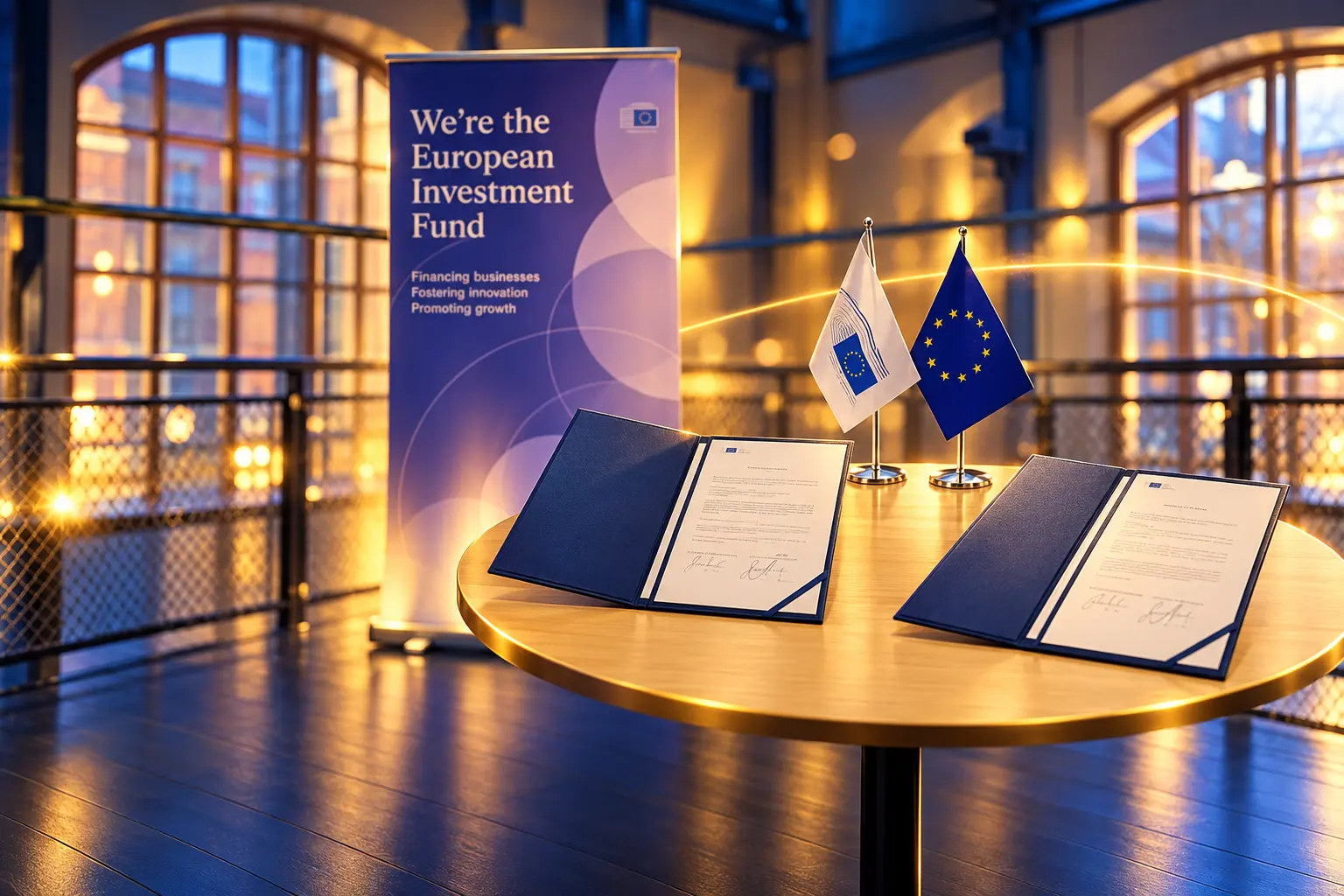
The European Investment Fund is committing up to €30 million to Nordic Foodtech VC Fund II, a Helsinki agrifood vehicle with an €80 million target. The pledge, set out on 10 September 2026, is designed to attract further private investors and take the fund very close to that size.
Fund II will write pre-seed and seed cheques, including to university spin-outs, for agriculture, food, health, aquaculture and biosolutions. The first close was €40 million in April 2025. The first fund, launched in 2020, backed 18 companies in the Nordics and Baltics.
EIF’s €30 Million Almost Fills an €80 Million Fund
On paper the sums are simple. A first close of €40 million plus an EIF cheque of up to €30 million to a Finnish fund would take NFT.VC Fund II to €70 million. That leaves about €10 million of private money if the vehicle is to hit €80 million, which is why the EIF says the pledge will help pull in more backers and bring the fund very close to target.
The EIF, the equity arm of the European Investment Bank Group, is acting as an anchor, not as a grant office. Its own release says many science-based agrifood firms in Europe still struggle to raise money at the point where a lab result has to become a product. The public cheque is meant to make the remaining private close easier to finish.
The EIF account posted the decision the same morning.
The EIF is backing 🇫🇮 Nordic Foodtech VC with up to €30m to support early-stage agrifood tech companies in Europe, with focus on Northern Europe.
The fund will accelerate the development of technology for more sustainable food production #InvestEU🇪🇺
🔗 https://t.co/HloEZSgdpB pic.twitter.com/f7btu19UNW
— European Investment Fund (@EIF_EU) September 10, 2026
That post sat in a Europe tech roundup beside AI legal tools and car-safety spin-outs. Specialist food science still does not move the same feed as software, which is the hole this stamp is supposed to fill.
THE CROWDING-IN SUMS
- First close: €40 million, April 2025.
- EIF pledge: up to €30 million, 10 September 2026.
- Combined: €70 million if no other new money arrives.
- Target: €80 million, about €10 million still to raise from private backers.
Seventeen months passed between the first close and the EIF announcement. Fund II had already opened its investment period in the second quarter of 2025, so the public money is landing in a fund that is writing cheques, not in a vehicle still on the drawing board.
What the €30 Million Buys in Practice
Fund II is a 10-year, closed-end partnership classified under Article 8 of the EU Sustainable Finance Disclosure Regulation. It will take minority stakes in early-stage companies across Europe, with the Nordics first. The EIF says initial investments are up to €2 million, with large reserves kept back for later rounds.
The manager’s own Fund II disclosures go further on the follow-on math. The vehicle plans to put 60% of invested capital into follow-on rounds, and it has set a floor of 40% of investments aligned with its environmental or social aims. A majority of deals are expected to count toward climate action and environmental goals. The fund also says it will aim to support gender diversity.
The EIF wrapping is not a single pot. The commitment sits on the InvestEU equity product for climate and environmental solutions, with money from the European Maritime, Fisheries and Aquaculture Fund for the blue economy, plus EIB Risk Capital Resources. InvestEU itself is built on an EU budget guarantee of €26.2 billion, intended to mobilise at least €372 billion of investment.
WHERE FUND II WILL PUT THE MONEY
- Stage: Pre-seed and seed, including spin-outs from universities and research centres.
- Sectors: Agriculture, food, health, aquaculture and the wider biosolutions trade.
- Map: Northern Europe first, with room to invest elsewhere on the continent.
- Tickets: Initial cheques up to €2 million, with most of the capital reserved for follow-on.
Co-founder and managing partner Mika Kukkurainen said the EIF backing lets the firm grow its reach across Northern Europe. “Our portfolio companies are building the deep-tech solutions Europe needs for food security, resilience and nutrition. We believe Europe has a unique opportunity and talent to lead in building the future for food and agriculture.”
Enifer, Kuva Space and a First-Fund Record
Nordic Foodtech VC was set up in 2019 and is owned by its partners. The team works from Helsinki and Copenhagen. Fund I is a €42 million vehicle launched in 2020. Its investment period ran from the second quarter of 2020 to the fourth quarter of 2024; the fund still makes selected follow-on investments. It put money into 18 companies across the Nordics and Baltics.
The holdings are not meal-kit apps. Enifer, first backed in 2020, runs the PEKILO mycoprotein process and turns side streams into protein for food, pet food and fish feed. Kuva Space, first backed in 2021, is building nanosatellites with hyperspectral cameras for daily data on vegetation and soil. Chromologics, a 2020 cheque, makes natural red food colours by fungal fermentation. Paras Aqua, 2023, is an on-land fish-farming design that tries to dodge both open-net damage and the capital cost of full recirculation plants.
SELECTED HOLDINGS ON THE FIRM’S BOOKS
| Company | First cheque | What it builds |
|---|---|---|
| Enifer | 2020 | PEKILO mycoprotein from industry side streams |
| Chromologics | 2020 | Natural red food colours via fungal fermentation |
| Kuva Space | 2021 | Hyperspectral nanosatellites for fields and soil |
| Paras Aqua | 2023 | On-land fish farming with a partial-air recirculation design |
| Mö Foods | 2025 | Oat-based cheese with no side stream |
| AquaNab | 2026 | Feed-mixed nanoantibodies against sea lice |
BioMush, a 2021 umami investment, was exited in 2025. Mö Foods and AquaNab sit after Fund I’s investment period ended, which means Fund II is already at work. Partner Louise Heiberg, who works from Denmark, said at the first close that raising in a tight market was hard, and that the food system is still inefficient for the planet and for people.
Finnish Pensions Sat in the First Close
Before the EIF arrived, Fund II’s backers were a Finnish room. The first close was supported by Tesi, Elo Mutual Pension Insurance Company, Valio Pension Fund and Heino Group. Peter Platan, investment director in Tesi’s fund-investments team, called Nordic Foodtech VC a distinctive FoodTech player in the Nordics, with research skill and a record of turning inventions into companies.
The manager’s limited partner mix published for Fund II shows how that first close was built, and how different it is from Fund I, which had no fund-of-funds money and was 48% public sector.
WHO SAT IN EACH FUND AT FIRST CLOSE
| LP type | Fund I | Fund II (first close) |
|---|---|---|
| Public sector | 48% | 25% |
| Pension funds | 28% | 21% |
| Fund of funds | 0% | 29% |
| Family offices | 12% | 12% |
| Corporate investors | 5% | 3% |
| Other | 7% | 11% |
| Finland share | 98% | 100% |
Fund II’s table still reads 100% Finland. The EIF is a Luxembourg-based EU body, so this cheque is the first large non-Finnish institutional name on the cap table. That is the crowding-in job in a second sense: not only more euros, but a passport that other European pensions can follow.
Kukkurainen put the specialist case plainly at the first close. The firm, he said, backs companies solving real industry problems, often straight out of the lab, where early-stage capital is still hard to find.
Why Agrifood Still Needs a Public Anchor
EIB Group Vice-President Karl Nehammer said Europe already has strong food and agriculture research, and that the missing pieces are money and know-how at the jump from laboratory to market. The EIF is paying for that jump, not for more papers.
While Europe has excellent research in food and agriculture, promising technologies need capital and expertise to make the leap from the laboratory to the market. Our investment will help more young companies turn new ideas into businesses that strengthen food security, climate resilience and European competitiveness.
Karl Nehammer, EIB Group Vice-President, EIF announcement, 10 September 2026
Agrifood deeptech is a slow product. Fermentation strains, on-land fish systems, nutrient recovery and satellite sensors need pilots, permits and kit before they earn revenue. Generalist seed funds priced on software speed often walk away. A specialist with follow-on reserves is the workaround, and even that workaround still needed an EU stamp to get near €80 million.
The EIB Group signed €100 billion of new financing and advisory work in 2025 across more than 870 projects. Agriculture and the bioeconomy sit among its eight core priorities. The EIF is also part of a wider push, with EU governments, to mobilise up to €80 billion for companies that can grow into global leaders, expanding the European Tech Champions Initiative, which has helped create 15 European mega-funds and scale 45 companies, including 12 unicorns, in three years. Fund II is a small, early-stage cousin of that scale story.
Dublin Saw a Similar EIF Cheque in June
This is not a one-off Finnish favour. On 9 June 2026 the EIF announced a €25 million commitment to Yield Lab Europe Fund 2, a pan-European agrifood fund expected to reach €100 million, with 30% earmarked for Ireland. That vehicle writes Seed and Series A tickets averaging about €750,000 and keeps two thirds of investable capital for follow-on, a later-stage cousin of Nordic Foodtech’s pre-seed brief.
Ioannis Tsakiris, vice-president of the EIB, said agriculture is central to food security, climate goals and competitiveness, and that it remains one of the most underserved sectors in venture capital. The Yield Lab release put numbers on that gap: the agrifood sector generates about 25% of global greenhouse-gas emissions and attracts 8% of climate-tech venture capital.
Yield Lab Europe Fund 1 was a €55 million fund from 2019 that made 32 investments in eight countries and recorded a positive return. Nordic Foodtech is smaller, earlier and more Nordic. The common design is the same: EIF capital as the quality mark that lets a specialist agrifood manager finish a raise private money would not finish alone.
AquaNab Shows Fund II Is Already Investing
AquaNab, a German company, received its first Nordic Foodtech cheque in 2026. It makes nanoantibodies that go in feed as an alternative to mechanical and chemical sea-lice treatments. That deal sits inside the blue-economy slice the European Maritime, Fisheries and Aquaculture Fund is meant to back. Mö Foods, an oat-cheese platform first backed in 2025, is another Fund II-period name.
So the EIF money is not opening the fund. It is thickening a fund that has already left the lab bench for Germany and for oat cheese, and that still has most of an around-30-company portfolio to build.
THE PATH TO THE EIF CHEQUE
- 2019: Nordic Foodtech Venture Capital Oy is established in Helsinki.
- Q2 2020: Fund I, a €42 million vehicle, starts investing in Nordic and Baltic food-system companies.
- Q4 2024: Fund I’s investment period ends; selected follow-on deals continue.
- 2024: Fund II launches as an Article 8 product with an €80 million target and a 10-year term.
- April 2025: Fund II reaches a €40 million first close, with Tesi, Elo, Valio Pension Fund and Heino Group among the backers.
- Q2 2025: Fund II’s investment period starts.
- 10 September 2026: The EIF commits up to €30 million, aiming to bring the fund very close to €80 million.
The remaining private gap is about €10 million if the EIF cheque is the only new money. Fund II has been investing for more than a year. The public stamp is arriving in time to finish the raise, not to start it.
Disclaimer: This article is news reporting and analysis of a fund commitment by the European Investment Fund and is for information only. It is not investment advice, a solicitation, or a recommendation to commit capital to Nordic Foodtech VC, NFT.VC Fund II, or any portfolio company. Anyone considering an investment in venture capital or agrifood technology should consult a qualified financial adviser or fund counsel who can review their circumstances and the fund documents. Figures and statuses reflect the EIF announcement of 10 September 2026 and the manager’s published disclosures, and they may change as fundraising and investing continue.

Musk Blames Indian Oligarchs While Starlink Waits in Line

France Extends Its Soda Tax to Packaged Biscuits and Cereal

Hormel Bets $1.055 Billion on Brakebush Restaurant Chicken

Hyundai Bets the 2027 Tucson on Hybrids, Not Plugs

Hyundai Bets the 2027 Tucson on Hybrids, Not Plugs

EIF’s €30 Million Pushes Nordic Foodtech Close to €80 Million
Hyundai Bets the 2027 Tucson on Hybrids, Not Plugs

AI Agents Can Act, but Someone Has to Own Them

Bass Persuades Puts Miley Back at No. 1 on Sales

Ocarina of Time’s Australia Listing Matches Yoshi at $59.99
-
 AUTO3 weeks ago
Hyundai Bets the 2027 Tucson on Hybrids, Not Plugs
-
 NEWS1 month ago
AI Agents Can Act, but Someone Has to Own Them
-
 ENTERTAINMENT3 weeks ago
Bass Persuades Puts Miley Back at No. 1 on Sales
-
 GAMING1 month ago
Ocarina of Time’s Australia Listing Matches Yoshi at $59.99
-

 NEWS1 month ago
Newark’s Phone Ban Starts as a Storage Problem
-

 NEWS1 month ago
LG Smart TVs Still Scan Homes Behind Apple TV
-

 NEWS1 month ago
Sembly 3.0 Makes Branded Decks and Shifts the Bottleneck
-

 NEWS1 month ago
Cheaper Tokens Made AI Deployments Cost Enterprises More