
Polymerase Chain Reaction, often called PCR, is one of the most important tools in modern biology. It acts like a high speed photocopier for genetic material. Scientists use this method to take a tiny sample of DNA and copy it millions of times in just a few hours.
This process allows researchers to study genetic material in detail that would otherwise be impossible to see. Polymerase Chain Reaction (PCR) works by heating and cooling DNA samples in cycles to separate strands and build new copies, enabling the detection of diseases, genetic markers, and bacteria with high precision.
The Origins and Basics of PCR Technology
Before the 1980s, working with DNA was a very slow and difficult task. Scientists had to wait days or weeks to get enough genetic material to study. This all changed when an American biochemist named Kary Mullis invented the PCR technique.
Mullis came up with the idea in 1983. His invention revolutionized the field of molecular biology almost overnight. Because of his work, doctors can now diagnose diseases faster, and police can solve crimes using tiny evidence samples. For his contribution, Kary Mullis was awarded the Nobel Prize in Chemistry in 1993.
The core concept is simple but brilliant. It mimics the natural way nature copies DNA but does it in a test tube under controlled conditions. The machine used for this is called a thermal cycler. It precisely changes the temperature of the sample to trigger different chemical reactions.
“The ability to amplify DNA sequences has completely transformed biological research and medical diagnostics.”
Today, this technology is standard in laboratories all over the world. It is the gold standard for testing many viral infections and genetic disorders. Without it, modern medicine would look very different.
Breaking Down the Three Steps of the Process
The magic of PCR happens in three distinct stages. These stages are repeated over and over again in a cycle. A typical run might involve 20 to 40 cycles. Each cycle doubles the amount of DNA in the tube.
The first step is called Denaturation. The double stranded DNA is heated to a high temperature, usually around 94 to 98 degrees Celsius. This heat breaks the hydrogen bonds holding the two strands together. It effectively unzips the DNA helix into two single strands.
Once the strands are separated, the temperature is lowered for the second step, known as Annealing. The temperature drops to between 50 and 65 degrees Celsius. This allows short pieces of DNA called primers to attach to the specific target sequence on the single strands.
The primers act as starting blocks. They tell the enzyme where to begin copying. If the primers do not match the target DNA perfectly, no copying will occur. This ensures that only the specific gene of interest is amplified.
The final step is Extension, sometimes called elongation. The temperature is raised again, usually to 72 degrees Celsius. This is the optimal temperature for the DNA polymerase enzyme to work.
The enzyme attaches to the primers and begins to add loose nucleotides to the single DNA strand. It builds a new, complementary strand of DNA. At the end of this step, you have two double stranded DNA molecules where you only started with one. According to the National Human Genome Research Institute, this cycle takes very little time, allowing for exponential growth of the target sequence.
Variations in Techniques for Better Results
While the basic method is powerful, scientists have developed variations to suit different needs. Standard PCR is great for simple detection, but sometimes more data is required. This has led to the creation of advanced methods like Real-time PCR and Quantitative PCR (qPCR).
Real time PCR allows scientists to watch the amplification as it happens. A special machine measures the amount of DNA after each cycle. This is done using fluorescent dyes or probes that light up when they bind to DNA.
| Feature | Standard PCR | Real-Time PCR (qPCR) |
|---|---|---|
| Result Timing | End of reaction | During the reaction |
| Method of Analysis | Gel Electrophoresis | Fluorescence Detection |
| Speed | Slower (requires post-processing) | Faster |
| Quantification | Qualitative (Yes/No) | Quantitative (How much?) |
Quantitative PCR is vital when knowing the exact amount of virus or bacteria matters. For example, in HIV treatment, doctors need to know the viral load to see if medication is working. qPCR provides this precise number.
Another important type is Reverse Transcription PCR (RT-PCR). This is used when the starting material is RNA, not DNA. Many viruses, like the one that causes COVID-19 and the flu, carry their genetic information in RNA. The RNA is first converted into DNA, and then the standard amplification process begins.
Critical Applications in Medicine and Forensics
The applications of this technology are vast. In the medical field, it is the primary method for diagnosing infectious diseases. It can detect pathogens like tuberculosis, malaria, and sexually transmitted infections long before traditional cultures can.
Genetic testing is another huge area. Doctors use it to screen for genetic mutations that might cause cancer or hereditary diseases. For instance, testing for BRCA1 and BRCA2 genes helps assess breast cancer risk.
- Prenatal testing: Checking for genetic abnormalities in a fetus.
- Tissue typing: Matching organ donors with recipients to prevent rejection.
- Cancer therapy: identifying specific mutations to choose the right drugs.
- Paternity testing: Confirming biological relationships with high accuracy.
In forensics, this tool is indispensable. Crime scene investigators often find only tiny drops of blood or a single hair follicle. This is not enough for older testing methods. With amplification, even a few cells are enough to generate a full genetic profile.
This profile acts like a genetic fingerprint. It can match a suspect to a crime scene with incredible reliability. It has also been used to exonerate people who were wrongly convicted of crimes before DNA testing was available.
Furthermore, it helps in identifying human remains after disasters. By comparing DNA from remains to family members, authorities can provide closure to grieving families. You can read more about how this works in forensic science in research published by the National Institutes of Health.
Advantages and Limitations to Consider
Despite its widespread use, the technique has both strong points and weak points. Understanding these helps scientists interpret results correctly. The biggest advantage is sensitivity.
It can detect a single gene copy in a sample. This makes it far superior to looking for symptoms or using microscopes. It is also very specific. By designing the right primers, scientists can target one specific organism out of thousands.
However, this extreme sensitivity is also a weakness. The risk of contamination is very high. If a stray piece of DNA floats into the tube from the air or skin, it will get amplified too. This leads to false positive results.
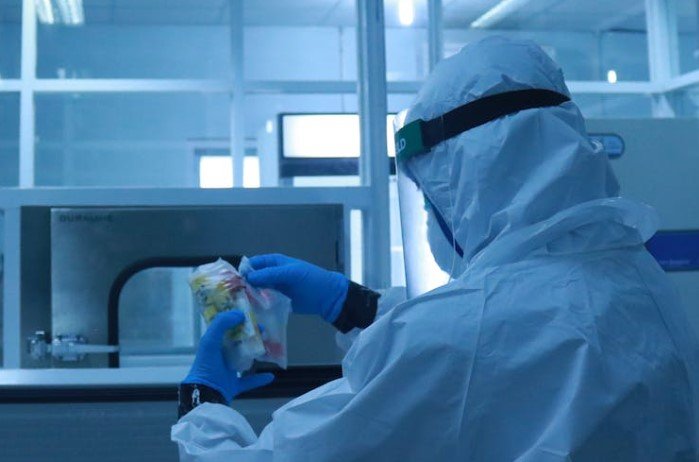
To prevent this, labs must be extremely clean. Technicians wear protective gear and use special filters. They also run “negative controls,” which are samples known to have no DNA, to check for cleanliness.
Another limitation is that you need to know what you are looking for. You cannot just put a sample in and ask “what is this?” You must design primers for a specific target. If a virus mutates and changes its genetic sequence, the primers might no longer stick, and the test will fail.
Cost is also a factor. The machines and reagents are expensive. While costs have come down, it is still pricier than some basic chemical tests. This can be a barrier in low resource settings.
The Future of Genetic Detection
The technology is not standing still. Researchers are constantly improving it to be faster, cheaper, and more mobile. The future lies in making these powerful tools available outside of big hospitals.
One exciting development is Digital PCR. This method breaks the sample into thousands of tiny droplets. Each droplet runs a separate reaction. This provides an even higher level of precision than current methods.
Portable devices are also being built. Imagine a device the size of a phone that can detect a virus in minutes in a remote village. This is becoming a reality with microfluidic chips that shrink the whole lab onto a small slide.
Personalized medicine is another frontier. In the future, doctors might run a quick panel in their office to see exactly how your body metabolizes drugs. This would allow them to prescribe the perfect dose for your specific genetic makeup.
As we understand more about the human genome, the need to detect and analyze specific genes will only grow. This amplification technique will remain at the center of that journey. It bridges the gap between the invisible world of molecules and the visible world of medical treatment.
Conclusion
Polymerase Chain Reaction has fundamentally changed how we understand life and treat disease. From catching criminals to fighting pandemics, its impact is undeniable. As technology advances, we can expect even faster and more accurate ways to read our genetic code. The power to detect the smallest traces of DNA ensures that this tool will remain essential for decades to come.
Share this article if you found it helpful! Join the conversation on social media.
#Genetics #ScienceTech #MedicalInnovation #DNA #FutureOfMedicine
Disclaimer: This content is for informational purposes only and does not constitute medical advice or diagnosis. Always consult a healthcare professional for medical concerns.


